

Most articles about Shopify Plus headless commerce are written for D2C brands selling sneakers and skincare. B2B is a different conversation. The pricing logic is more complex, the buyer journey is longer, and the math behind “is it worth it” looks nothing like a DTC brand chasing Core Web Vitals.
This guide is for B2B leaders weighing whether to go headless on Shopify Plus in 2026. We’ll cover what it really costs, when it makes sense, and when native Shopify Plus is the smarter call.
TL;DR
- Headless Shopify Plus means building a custom storefront (in React, Next.js, or Shopify’s Hydrogen) on top of Shopify’s commerce backend.
- For B2B, headless makes sense when native Plus features can’t express your buyer experience — typically when ERP-driven pricing, custom portals, or mobile parity are involved.
- Realistic build cost: $80K–$200K. Realistic monthly run-rate: $5,200–$17,300. That second number is the one most cost calculators hide.
- Native Shopify Plus B2B has gotten much better. A meaningful share of brands that would have gone headless in 2023 don’t need to in 2026.
What is Shopify Plus headless commerce?
Headless commerce is an architecture choice, not a Shopify product. In a normal Shopify Plus store, the frontend (what your buyer sees) and the backend (products, cart, checkout, customer data) are bound together. You build the frontend with Liquid themes and ship everything from Shopify’s servers.
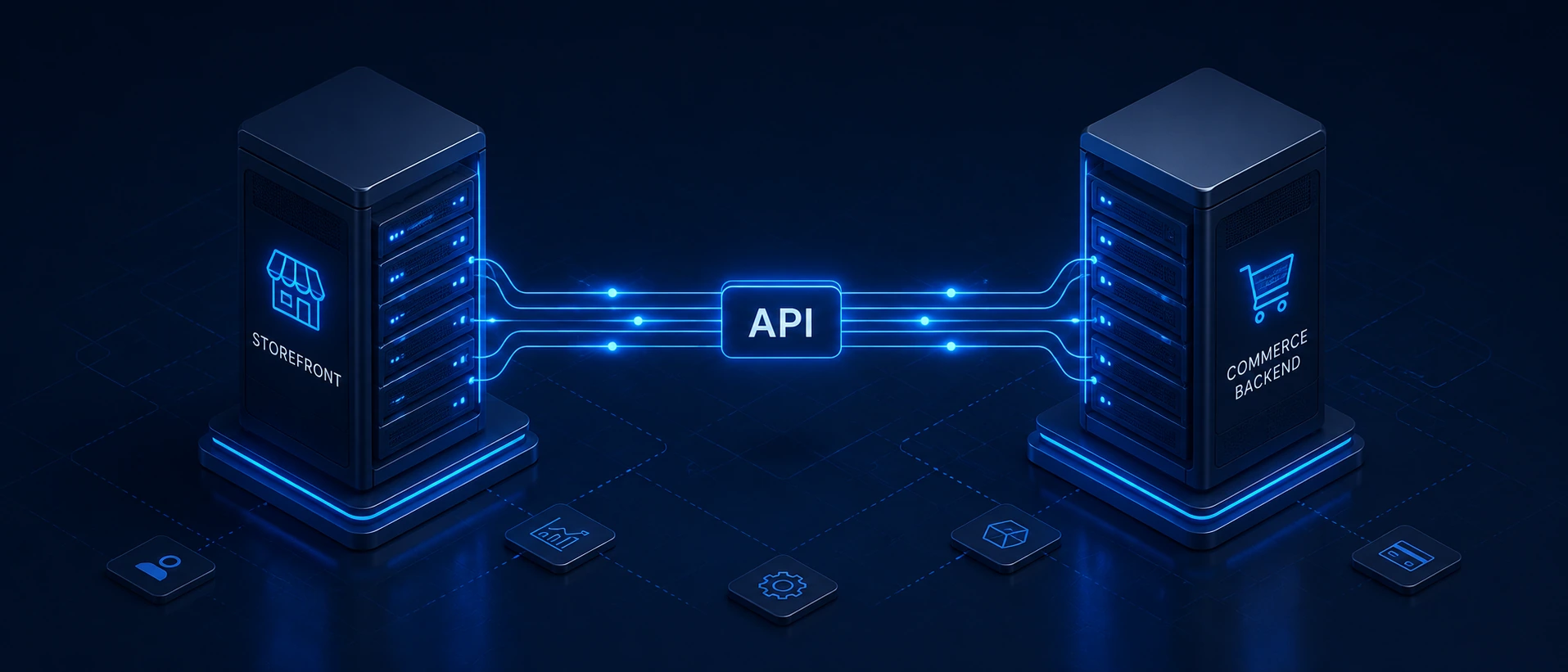
In a headless build, you split the two. Shopify Plus still runs the backend. The storefront is a separate app you build in React, Next.js, or Hydrogen, and the two halves talk through Shopify’s APIs.
That separation is what unlocks the things headless agencies talk about: full design freedom, faster pages, custom URL structures, mobile apps, and the ability to mix and match best-in-class tools. It’s also what introduces the cost and complexity the rest of this article unpacks honestly.
Headless vs. traditional Shopify Plus
| Traditional Plus | Headless Plus | |
|---|---|---|
| Frontend | Liquid themes | Custom React or Hydrogen |
| Time to launch | 4–12 weeks | 4–12 months |
| Build cost | $20K–$80K | $80K–$200K+ |
| Monthly run-rate | $2,300–$3,500 | $5,200–$17,300 |
| Design control | Constrained by theme | Total |
| Page builders (Shogun, PageFly) | Work natively | Don’t work — devs build everything |
| Time to change UI | Hours | Days to weeks |
| Best for | Marketing-led teams | Dev-led teams |
The most underweighted item on this table is “time to change UI.” On traditional Plus, a marketing manager updates a landing page in fifteen minutes. On a headless build, the same change is a dev sprint. That trade-off compounds fast for marketing-led organizations.
When B2B brands actually need headless
Most “why go headless” lists are interchangeable across articles. Here are the three real drivers we see in actual B2B engagements — meaning the situations where native Shopify Plus B2B can’t get you all the way there.
1. ERP-driven contract pricing. If your prices live in NetSuite, SAP, Microsoft Dynamics, or Acumatica, and they change daily based on contracts, promo overrides, or currency rules, pre-syncing them into Shopify catalogs eventually breaks. A headless storefront can call your ERP at cart-time, resolve the actual price, and render it on the page. Shopify still processes the order. The pricing authority stays in the ERP.
2. Multiple portals from one backend. Many B2B operations need more than a buyer storefront. They need a sales rep portal where reps place orders for buyers, sometimes a dealer portal with different visibility rules, sometimes a customer service portal for support and returns. Native Plus handles some of this. Headless lets you build all of it from one backend, with each portal looking and behaving differently.
3. Catalogs that outgrow the native limit. Shopify Plus B2B supports up to 25 catalogs per company location. Generous for most. Limiting if your business runs on dozens of negotiated catalogs per account with conditional product visibility based on contract terms.
If two of these are true for your business, the headless conversation is worth having. If zero are true, native Plus is likely enough — and we’ll say so to your face before you spend $150K finding out the hard way.
Your three architecture options
There’s no single “headless build” recipe. There are three meaningfully different approaches.
Hydrogen + Oxygen is Shopify’s own React framework, hosted on Shopify’s edge network. Tightest integration with Shopify’s roadmap. Oxygen hosting is included with all Shopify Plans. Best if your storefront is the whole product and you trust Shopify’s direction.
Bring your own stack means building in Next.js, Remix, or Nuxt and hosting on Vercel or Netlify. Bigger talent pool. Easier to integrate with content-heavy CMSs like Sanity or Contentful. Pay for hosting separately. Best if your team already knows Next.js or your site is content-heavy.
Hybrid is the option nobody talks about. You keep Liquid for most pages and go headless only on the parts that need it — usually a sales rep portal, a B2B account dashboard, or a custom cart experience. Lower build cost. Lower monthly burn. Marketing keeps using the theme editor. This is often the smartest move for mid-market brands tempted by full headless but unable to justify the cost.
What changed in 2026
If you’re reading a headless Shopify article written before March 2026, treat it with suspicion. Two things changed materially.
Customer Account API replaced legacy customer accounts. As of February 2026, Shopify deprecated the old customer auth system. Headless builds completed before mid-2024 are running on a system Shopify no longer supports. Migration to the new Customer Account API (which uses OAuth 2.0 and supports passwordless email login) typically takes 4–8 weeks. If you have an older headless build, this is the thing to audit first.
B2B contextualization is now well-documented. Showing the right buyer the right catalog, pricing, and payment terms in a headless storefront used to be a custom puzzle. Shopify now has a clear pattern using the @inContext directive with a buyer’s company location ID. Done right, it’s why a headless B2B build actually behaves like B2B. Done wrong (or skipped), it’s the most common reason an early build “works” but shows base pricing to everyone.
The real cost of going headless
This is the section every brand reads twice. Most cost calculators on the SERP hide what the monthly burn actually looks like.
One-time build:
- Minimal headless: $80K–$120K, 4–6 months
- Standard B2B headless (custom catalogs, ERP integration, one portal): $120K–$200K, 6–9 months
- Complex B2B headless (multiple portals, contract pricing engine, mobile app): $200K–$400K+, 9–14 months
Monthly run-rate after launch:
| Line item | Monthly cost |
|---|---|
| Shopify Plus | $2,300+ |
| Headless CMS (Contentful, Storyblok, Sanity) | $300–$1,500 |
| Frontend hosting (Vercel, Netlify) — $0 with Hydrogen on Oxygen | $0–$1,000 |
| Search (Algolia, Klevu) | $500–$2,000 |
| Monitoring and error tracking | $100–$500 |
| Ongoing dev capacity | $2,000–$10,000 |
| Total | $5,200–$17,300 |
That’s $62K–$208K per year on top of the build. A three-year TCO for a real B2B operation lands between $300K and $800K.
The ROI has to justify those numbers. For most B2B brands above $5M annual revenue with a differentiated buyer experience, it does. Below that, native Plus or hybrid is usually the smarter call.
When headless is the right call (and when it isn’t)
Go headless if:
- Revenue is above $5M and growing
- The buyer experience is part of your competitive edge, not just a cost center
- You have or will hire at least one internal frontend engineer
- Your ERP holds pricing logic that doesn’t fit cleanly into Shopify catalogs
- You need parity across web, mobile, kiosks, or field sales tools
Stay on traditional Plus if:
- You can express your needs with native Plus B2B and a few apps
- Your team is marketing-led, not dev-led
- Your roadmap is “more catalogs, faster campaigns” — not “different shopping UX”
- You don’t have the engineering capacity to maintain a headless stack after launch
Consider hybrid if:
- Native Plus gets you 80% there, but one specific portal or workflow needs custom architecture
- You want the cost profile closer to traditional Plus, with headless only where it earns its place
The honest part nobody likes saying: native Shopify Plus B2B has gotten substantially better since 2023. Companies, locations, catalogs, price lists, payment terms, draft orders, B2B markets — most of what used to require headless is now native. We see plenty of brands that would have gone headless two years ago and don’t need to in 2026.
How Atwix approaches headless Plus B2B
We’ve been building headless commerce since long before “headless” was the marketing term. Our deepest experience is on Adobe Commerce, including PWA Studio builds that still run major B2B operations today. The architecture patterns transfer cleanly to Shopify Plus — what changes is the API surface, not the thinking.
What we bring to a Shopify Plus headless B2B engagement:
- B2B contextualization done right across catalog, cart, and account
- ERP integration through Sirius, our middleware product, with pre-built mappings for NetSuite, SAP, Dynamics, Acumatica, and Infor
- The honest hybrid recommendation when full headless is overkill
- Customer Account API migration if you’re on a build that predates 2024
As an Adobe Gold Solution Partner, Shopify Plus Partner, and the #1 global Magento code contributor for eight years running, we sit at the intersection of enterprise B2B and platform expertise that most agencies can’t match.